Case Study

Grooovy In Progress

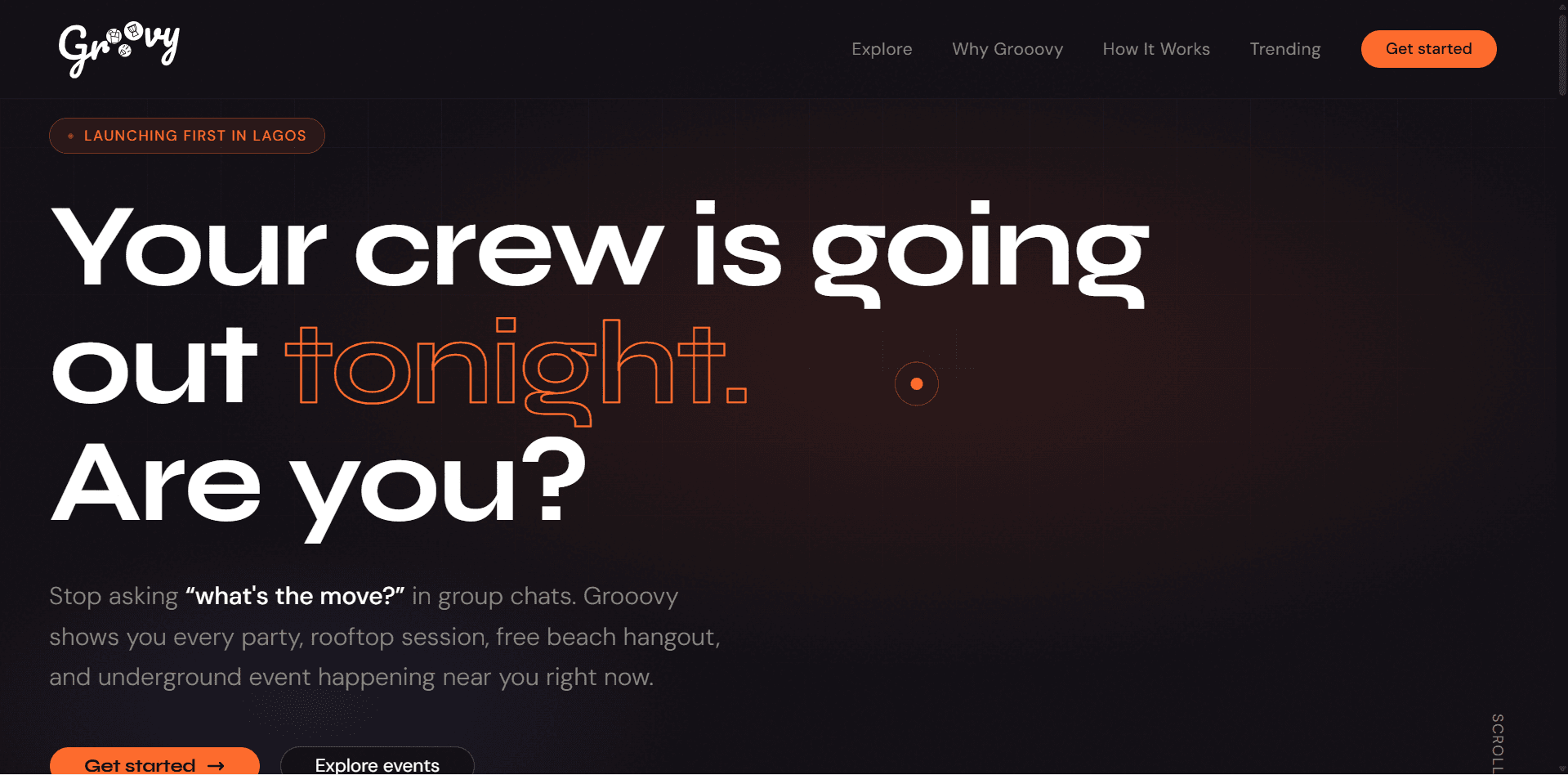
Grooovy

Designing a vibe-first event platform that turns social discovery, signup, and planning into one fast flow.

EventsConsumerPlatform

Project Overview.

Grooovy is a nightlife and social event discovery platform built to surface the plans that usually stay buried in group chats, stories, and word of mouth.

The experience combines a public vibe-first discovery flow with guided onboarding, Supabase-backed authentication, and a protected dashboard where users can manage plans, tickets, wallet activity, and hosting tools.

Across public event pages, RSVP and checkout flows, host workspaces, and admin views, the product is being designed to make the path from curiosity to commitment feel warm, cinematic, and fast.
Goals.

  • Make nightlife and social event discovery feel closer to the way people actually decide what to do.
  • Connect public browsing, guided onboarding, and signed-in planning tools without losing momentum.
  • Build a warm, cinematic, mobile-friendly interface that still supports host, wallet, and admin workflows.

From Idea To Launch.

A walkthrough of how the work moved from framing to execution.

01
Milestone 01Problem Discovery
Problem DiscoveryStep 01

Start with the messy way people actually discover plans.

The public product surface is being shaped around curated event discovery so the browsing experience feels more like reading the city's mood than navigating a cold listings directory.

Event detail pages, related events, and RSVP or checkout flows are designed to keep users moving from interest to action without unnecessary detours.

02
Milestone 02Insight Layer
Insight LayerStep 02

Use onboarding to turn personal taste into product context.

The onboarding flow asks new users for their city and preferred vibes before account creation so the signed-in experience can feel more personal from the start.

Authentication, password recovery, and protected dashboard access are being treated as part of the product experience, not just background account plumbing.

03
Milestone 03Solution Direction
Solution DirectionStep 03

Design event pages to keep curiosity moving toward commitment.

Individual event pages are being designed to balance mood, core logistics, related events, and RSVP or checkout actions without stalling the user.

That flow matters because discovery products only work when the jump from maybe to I'm in feels short and obvious.

04
Milestone 04Product Build
Product BuildStep 04

Extend the fix beyond browsing into plans, tickets, wallets, and hosting.

The signed-in product includes upcoming plans, saved and past events, ticket views, wallet activity, and personalized identity details like city and vibe tags.

Host and admin surfaces are being designed alongside the user journey so event creation, attendee visibility, payouts, and summary analytics all live inside the same broader ecosystem.

05
Milestone 05Current State
Current StateStep 05

Tighten the handoff from discovery into the signed-in product.

The project is currently at the point where public event discovery, onboarding, and dashboard behavior are being refined into a smoother end-to-end flow.

The focus now is making sure the product feels just as strong after login as it does during first-touch browsing, especially across plans, tickets, wallets, and host tools.

Results .

  • Established a product structure that connects discovery, onboarding, and signed-in planning in one coherent experience.
  • Built out core flows for event exploration, account creation, personalized dashboards, and host tooling.
  • Created a foundation for a multi-surface social product that can grow from weekend plans into a broader event ecosystem.

Reflection.

Event products live or die on momentum. Every screen should shorten the distance between curiosity and commitment.

More Work.

Explore the rest of the archive.